Quick answer: SAE felt grades identify different specifications for wool and part-wool pressed felt. The grade affects wool content, density, thickness availability, strength and other performance characteristics. Start with the job the felt must perform, then compare candidate grades in an SAE specification chart rather than assuming that one grade is best for every application.
When a print or purchase order calls for F-1, F-5, F-13 or F-55 felt, the designation is not simply a marketing name. The SAE Grade points the buyer towards an established material specification, understanding that system helps reduce substitution errors, inconsistent part performance and delays during purchasing.
What is SAE grade wool felt?
SAE wool felt is a dense nonwoven material produced by felting wool fibers under controlled moisture, pressure and mechanical action. It is different from a loose craft felt or an unspecified nonwoven pad. SAE J314, Felts—Wool and Part Wool, describes recommended properties and trade grade designations, including wool content, mass and mechanical requirements. The September 2022 edition is listed as stabilized by SAE International.
The grades are not one universal hardness scale. They represent combinations of fiber composition, material density and other requirements. A lower F-number often indicates a firmer grade in commonly stocked ranges, but selection should always be based on the actual chart and required properties.
Examples of common SAE felt grades
The following examples use Sutherland Felt’s published SAE reference chart. Density values refer to the chart’s standard one-inch-thickness basis, not the weight of every sheet sold.
Grade
Minimum wool content
Reference density, lb/sq yd at 1 inch
Typical selection consideration
F-1
95%
16
Dense, high-strength pressed felt
F-3
85%
15.6
Dense gray felt with different composition
F-5
95%
12.24
Firm felt where F-1 density is unnecessary
F-7
80%
12.24
Medium-density gray option
F-10
95%
8.48
Less-dense grade for more compliant applications
F-13
75%
8.48
Gray grade with a different fiber blend
F-55
75%
12
Thin-gauge gray/black option in the reference chart
These are screening data, not full purchasing specifications, for example, F-55 is listed in a thinner standard thickness range than F-1, even though both are SAE grades. Always check the exact grade, thickness, width and tolerance together. View our full specification chart here
Match the grade to the application
Lubrication wicks and pads: Review oil absorption and capillarity along with thickness. A felt that absorbs liquid is not automatically suitable for a specific oil, operating temperature or feed rate.
Machinery wipers and wear pads: Prioritize surface contact, abrasion, compressive load and the consequences of fiber shedding. Sample the material against the actual metal or moving surface.
Gaskets and seals: Consider whether the component is intended as a dust barrier, oil-retaining element, spacer or true fluid seal. SAE Grade Felt should not be assumed to provide a pressure-tight seal without testing, therefore, we recommend to request a sample first before full purchase.
Bumpers, cushions and spacers: Choose density and compressibility according to the expected clamping force and whether the part must recover after compression.
Five details to include on a felt purchase specification
SAE grade or equivalent commercial designation.
Finished thickness and acceptable tolerance.
Required width, sheet size or cut-part drawing.
Service conditions, including media, temperature, pressure and abrasion.
Annual quantity and any adhesive, slit-roll or die-cut requirements.
If the original drawing specifies an obsolete or unfamiliar designation, ask for a cross-reference rather than substituting a similar-looking felt.
Frequently asked questions
Is F-1 felt always better than F-5?
No. F-1 is denser in the cited chart, but extra density can increase cost or reduce compressibility without improving the part’s function. The best grade is the one that satisfies the engineering requirement.
Are all SAE felt grades 100% wool?
No. The SAE grades include both wool-rich and part-wool compositions. Minimum wool content varies by grade.
Can I buy SAE felt by the yard or as finished parts?
Yes. Depending on the grade and supplier, industrial felt can be sold as yardage, slit strips or cut components. Confirm available dimensions and order minimums. Give our experts a call at 248-480-0450.


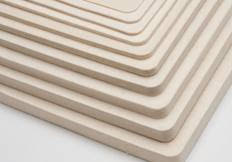
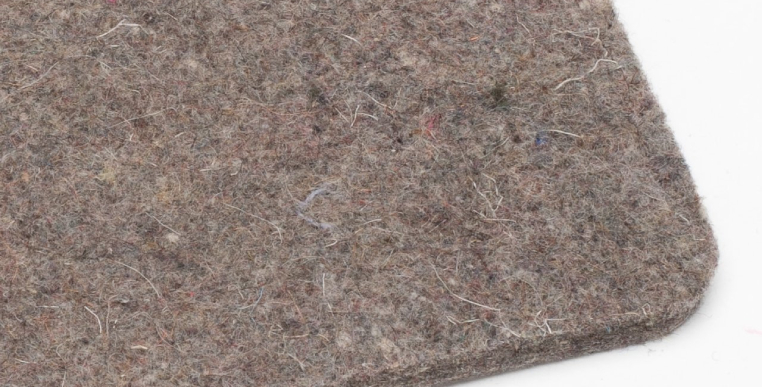
 Lubrication wicks and pads: Review oil absorption and capillarity along with thickness. A felt that absorbs liquid is not automatically suitable for a specific oil, operating temperature or feed rate.
 Gaskets and seals: Consider whether the component is intended as a dust barrier, oil-retaining element, spacer or true fluid seal. SAE Grade Felt should not be assumed to provide a pressure-tight seal without testing, therefore, we recommend to request a sample first before full purchase.